Profile
UV Coating Solutions for Modern Materials: A Comprehensive Guide
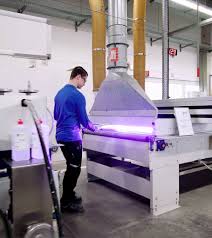
UV coating finish systems have revolutionized the protective coating industry in the last decade. Advanced formulations instantaneously cure with ultraviolet light, providing hard surfaces with durability superior to that of conventional varnishes and coatings. Industries across various manufacturing sectors have now embraced this technology due to its ecological and performance advantages.
Putting UV Protective Coatings into Wood Finish Applications
UV-curable wood coatings are a breakthrough in the furniture and flooring business. The special formulations effectively penetrate deep into wood fiber and create a protective layer on the surface. Instant curing means no lengthy drying times, and the manufacturer can significantly improve its efficiency.
Professional woodworkers understand how these coatings support natural graining while providing phenomenal scratch resistance. The technology finds its best application on hardwood floors, kitchen cabinets, and outdoor furniture, where durability is an adequate consideration.
Widely Applicable Across Different Materials
Modern UV coating systems demonstrate remarkable versatility when applied to different substrate types:
Wood surfaces benefit from enhanced moisture resistance and improved dimensional stability.
Plastic components get superior chemical resistance and UV stability for outdoor applications.
Metal substrates receive excellent corrosion protection and aesthetic enhancement.
Composite materials acquire a comparable coat with an even finish and a uniform appearance at heterogeneous material composition.
These coatings readily conform to various surface textures and compositions, hence being excellent for complex manufacturing activities.
Innovations in Composite Materials
UV coatings have a remarkable effect on composite materials because of the accuracy in controlling their application. These engineered materials combine different components that traditionally respond differently to different curing procedures. In this regard, UV systems offer uniform performance across complex surface compositions. UV coatings finishes for wood, plastic, composite, and metal applications continue to grow and innovate.
Composite panels and structural parts have found extensive application of these coatings in the aerospace and automotive industries.
Environmental and Economic Advantages
UV-curable coatings for wood and other materials offer enormous environmental advantages over solvent systems. These virtually no VOC formulations would thus afford much safer working conditions for operators. Cost reductions not only occur through energy deductions but also through reduced wastage and improved yield rates. Accurate application control for UV also minimizes overspray and material wastage, which are critical losses in traditional coating systems.
Making Smart Choices for Real Projects
Choosing between traditional methods and modern coatings isn’t about following current trends in the world. The best UV-cured wood finish products make perfect sense for high-volume operations without compromising on time, money, and durability. Meanwhile, custom coatings for plastic surfaces solve problems that standard solutions can’t handle.
Conclusion
Research is ongoing for UV coating finishes through superior formulations and application methods. New photoinitiator systems allow thick films to cure while maintaining excellent surface properties. Wise coating technologies would incorporate self-healing properties, thus defining the next generation of protective surface treatments.
On the other hand, integration of nanotechnology gives performance improvements in wood, plastics, composites, and metal applications, thereby keeping this technology at the forefront of innovation for surface protection.
Map
Sorry, no records were found. Please adjust your search criteria and try again.
Sorry, unable to load the Maps API.